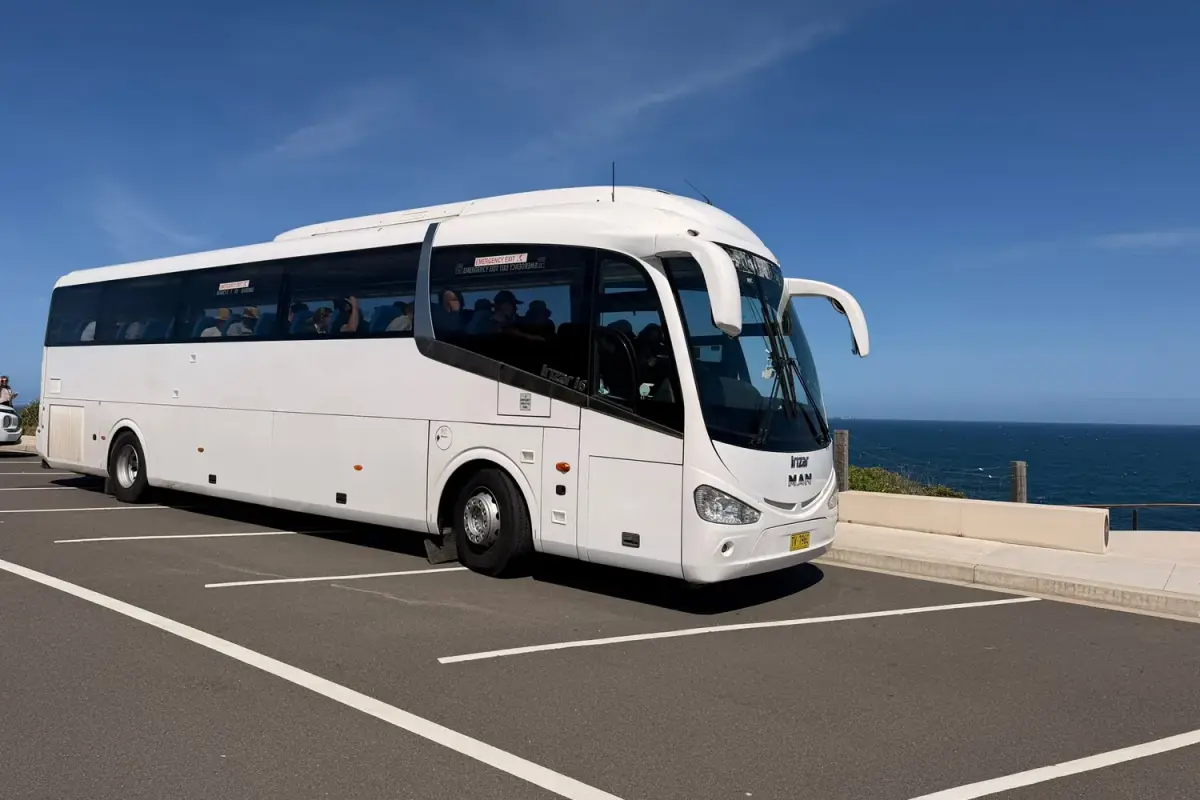
A shuttle is a loop, not a trip
A charter takes a group from A to B. A shuttle keeps going. The bus drops at the gate, heads back to the car park, loads again and repeats until the window closes. That changes how you plan it. The question isn’t “how big a bus” but “how often does a bus need to arrive so the queue never builds up”.
For an event, that usually means two busy windows. The first is the run-in before the gates open or the first act starts. The second is the end, when a few thousand people decide to leave at the same moment. In between, a smaller number of vehicles can keep a lighter service going, or stand by.
What we need to know
- Where people start. Overflow car parks, a train station, a park and ride site or a group of hotels.
- Where they’re going. The gate, the drop-off zone, the front of the venue.
- How many will use the shuttle. Not total attendance, just the people who’ll ride.
- The windows. When the first run needs to leave, when the last one does, and the busy patches.
- Anything the venue has told you. Kerb space, approach routes, height limits, bus bays, pre-booking.
Sizes we quote for event loops
We quote vehicles from 12 seats up to 62 seats, and for bigger events, several vehicles together. Short loops between a car park and a gate often work best with a steady stream of mid-size vehicles. Longer runs, like a station a few kilometres away, tend to favour full-size coaches so each trip moves more people. The fleet page shows every size we quote.
The end of the night
This is where most event transport plans fall over. Everyone leaves together, the road out is busy and the queue for the shuttle can get long. We plan the departure side as carefully as the arrival side: where the loading point is, how people will find it, and how many vehicles need to be waiting before the last act finishes.
Your quote confirms the plan in writing, including the vehicles, the stops and the times.