A car park shuttle lives or dies on three things. How long one loop takes, how many people arrive in the busiest half hour, and what the venue lets buses do at the kerb. Get one wrong and you end up with a long queue in a hot car park.
Here’s how we’d work through it before asking anyone for a quote. If you’d rather skip ahead, the planner on our home page gives you a rough picture in about thirty seconds.
Start with the busiest half hour, not the total crowd
Organisers usually start with attendance, but most of those people won’t touch the shuttle. What matters is how many people will be standing in your car park wanting a ride, and when.
For most events the answer is lumpy. A trickle in the morning, a surge in the 45 minutes before the headline act or the first bounce, then nothing for hours, then everyone at once at the end. The shuttle has to cope with the surge. The quiet bits look after themselves.
So the first number to pin down is something like: “About 1,200 people from the overflow car park, most of them between 5.30 and 6.30.” That’s a number a plan can be built on.
Then time the loop honestly
Loop time is how long one vehicle takes to leave the car park, get to the gate, unload, come back and load again. People always underestimate it. They drive the route on a quiet Tuesday, see seven minutes each way and call it a 15 minute loop.
On event day it won’t be. There’s traffic marshalling, a slow last 200 metres near the gate, and loading always takes longer than you’d think. We’d add at least a third to whatever the quiet-day drive says, and more if the road in is the same road everyone’s driving.
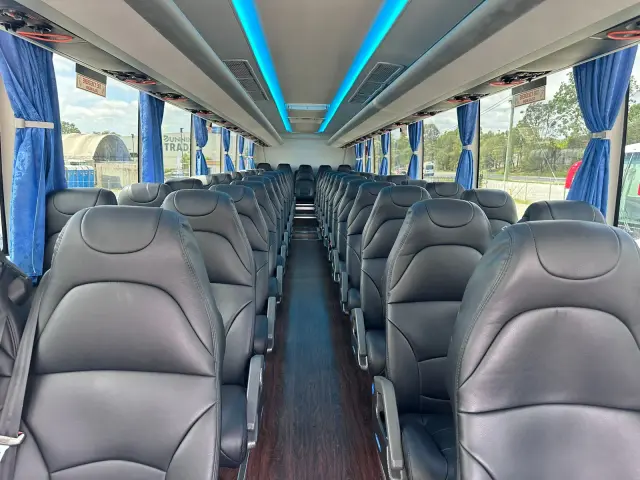
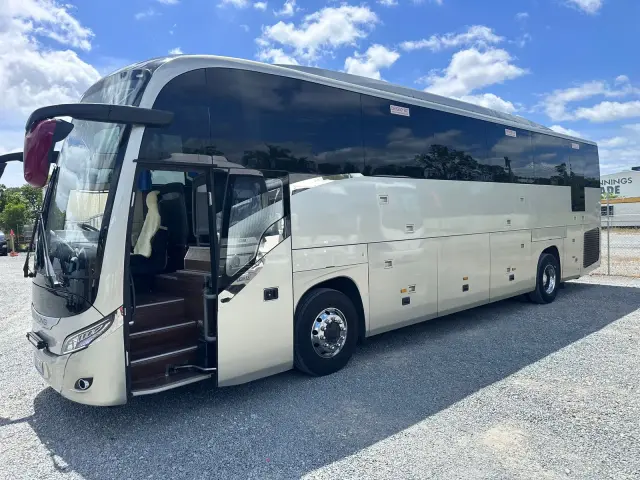
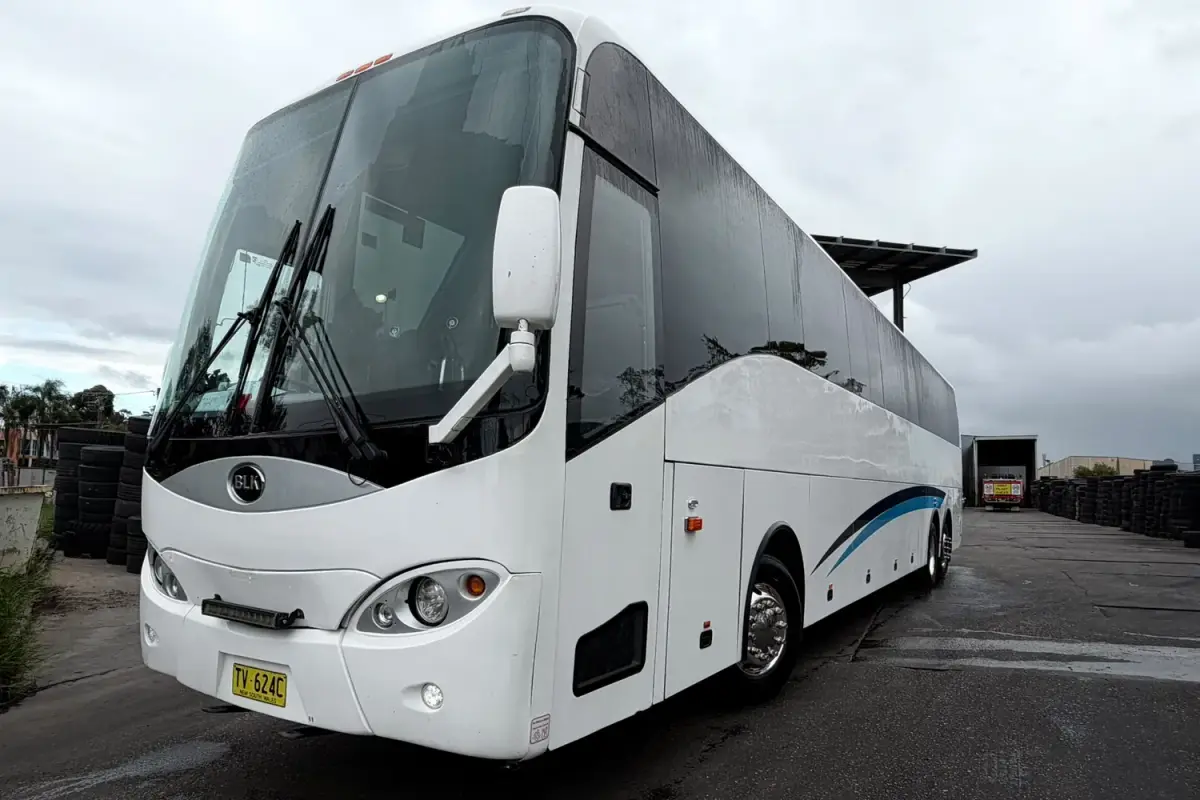
Once you have a loop time, the maths is simple. If the loop is 20 minutes and the surge lasts an hour, each vehicle gets about three runs. A 57 seat coach doing three full runs moves 171 people. If you need to move 1,200, that’s seven or eight coaches, and one leaves the car park every two or three minutes. That’s a busy kerb, which brings us to the next bit.
Find out what the venue allows
Every venue has its own rules for buses, and they’re not always obvious. Some have a dedicated coach area that must be pre-booked. Some set an approach route and won’t let coaches come in any other way. Some only let buses set down at certain times.
Sydney Olympic Park is a good example of a venue that writes it down. Its parking FAQs say the main bus drop-off and parking area is Coach Pod C, off Edwin Flack Avenue near Accor Stadium, with access from Uhrig Road via Carter Street. Its pre-book parking system closes at 11.59 pm the day before an event, and it warns that parking can sell out for major event weekends. If your event’s there, that’s exactly the sort of thing your shuttle plan has to fit.
Not every venue is that clear. If yours isn’t, ask the venue or the event’s traffic manager three questions:
- Where can a shuttle set down and pick up, and is that spot shared with taxis or rideshare?
- Is there an approach route or a time when buses can’t come in?
- Is there somewhere nearby for a vehicle to wait between runs?
Make the car park end easy
The car park end gets less attention than the venue end, and it shouldn’t. People need to find the stop. A temporary sign, a flag or a person in a hi-vis vest pointing the way does more than you’d expect. The loading spot should let a vehicle pull in, load and pull out without reversing or doing a three-point turn, because each of those adds a minute to every loop.
In a big car park, put the stop near the exit so buses don’t have to drive through rows of parked cars.
Don’t forget the way home
Arrivals are spread over an hour or so. Departures often aren’t. When the last song finishes, a few thousand people head for the exit within ten minutes, and they all want the shuttle at once.
The run-out needs its own plan. That usually means more vehicles waiting before the finish, a clear loading area that can take a queue, and a realistic idea of how long it’ll take to clear everyone.
What to send when you ask for a quote
You don’t need everything sorted. A good first message has the stops, a rough count of shuttle riders, the busy windows, and anything the venue has already told you. From that we can suggest vehicle sizes and how often each stop should see a bus, and the event shuttles page has a bit more on how we plan them. When you’re ready, the quote form is the place to start, and the quote confirms the plan in writing.