A conference shuttle is really a small bus route that runs for two or three days. It has stops, a timetable and a peak hour, and it needs the same thinking as any other route. Get the hotels grouped sensibly, time the morning peak properly and give delegates a timetable they can read, and it pretty much runs itself.
Here’s how we go about it, with a few things we’ve learned to check early.
Group the hotels before you do anything else
Conference organisers often end up with delegates scattered across four or five hotels, because that’s where the room blocks were. The temptation is to run one big loop that calls at all of them. Don’t, unless they’re close together.
Every extra stop adds time to the loop, and the delegates at the first hotel sit on the bus while it collects everyone else. A loop that calls at three hotels within a few blocks of each other is fine. A loop that crosses the CBD and back to collect from a fifth hotel at Pyrmont is not.
Look at a map, circle the hotels that sit close together, and treat each cluster as its own loop. Two short loops with a bus every 10 minutes beat one long loop where the wait is 25.
Time the morning peak to the program
Delegates don’t trickle in evenly. Most arrive in a tight window between registration opening and the first session. If registration opens at 8 and the opening keynote starts at 9, the busiest runs sit somewhere between 7.30 and 8.45. That’s your peak, and it sets how many vehicles you need.
Take the number of delegates at each hotel cluster, work out how many will ride in that window, and size the loop to clear them. The rest of the day is easier. Some events keep one vehicle on a lighter service through the middle of the day. Plenty don’t need anything until the afternoon close.
The evening peak is the mirror image, except delegates leave less tidily. Some go straight after the last session, some stay for drinks. A couple of extra runs after the official finish catches the stragglers.
Know where the bus actually stops at the venue
This sounds obvious, but it catches people out. Big convention venues have set-down areas, and they’re often shared with taxis and rideshare. Some have rules about where coaches wait between runs.
Take ICC Sydney at Darling Harbour. Its travel and location page lists Iron Wharf Place and Zollner Circuit, both accessed from Darling Drive, as its taxi pick-up and drop-off points, and says the venue can be reached on foot, by car, coach and light rail. It also mentions the car parks have a 2.2 metre entry height, so coaches obviously aren’t waiting in there. For a shuttle plan, the useful step is to ask your event contact at the venue where coaches should set down and pick up for your event, and whether there’s anywhere nearby to wait.
Whatever the venue, get that answer in writing early. It changes the loop time, and it changes where you tell delegates to go at the end of the day.
The hotel end matters too
Most hotel driveways weren’t built for coaches. Some can take one, some can’t take any, and some will ask you to use a street out the front. Check with each hotel’s front desk or concierge where a bus can pull in. Then pick one clear meeting point per hotel and use it every time. “Out the front by the flag poles” is better than “the lobby”, because the lobby has three exits.
Give delegates a timetable they’ll actually read
A good conference timetable fits on one screen. Departure times for each hotel in the morning, departure times from the venue in the evening, and where to stand. That’s it. Put it in the event app, print it for the concierge desk, and get the MC to mention the last run of the day.
Avoid “every 10 minutes from 7.30”. People read that as “a bus is always there”. Clock times work better: 7.30, 7.40, 7.50, 8.00. They know if they’ve missed one.
Sizes and mixing
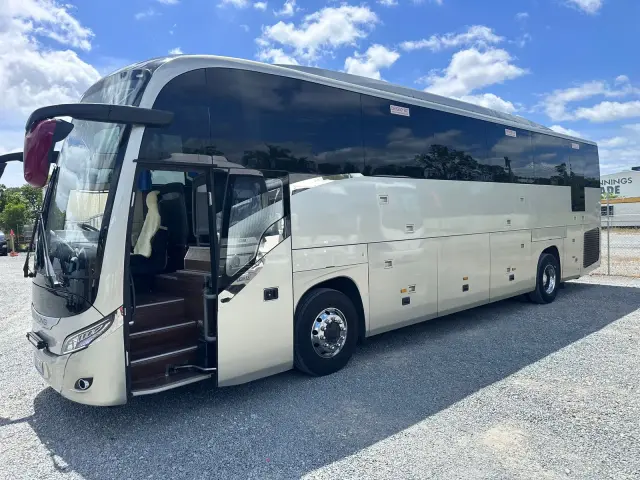
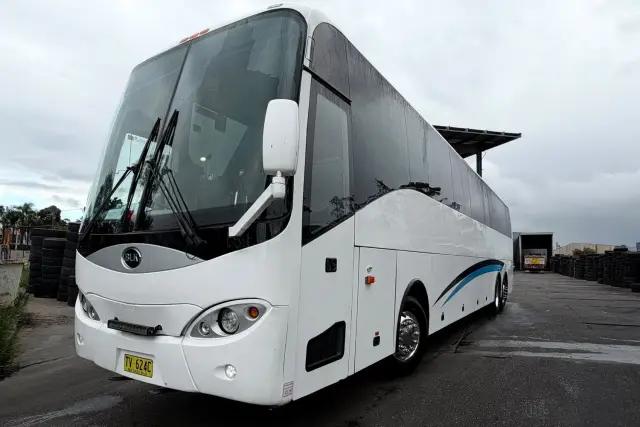
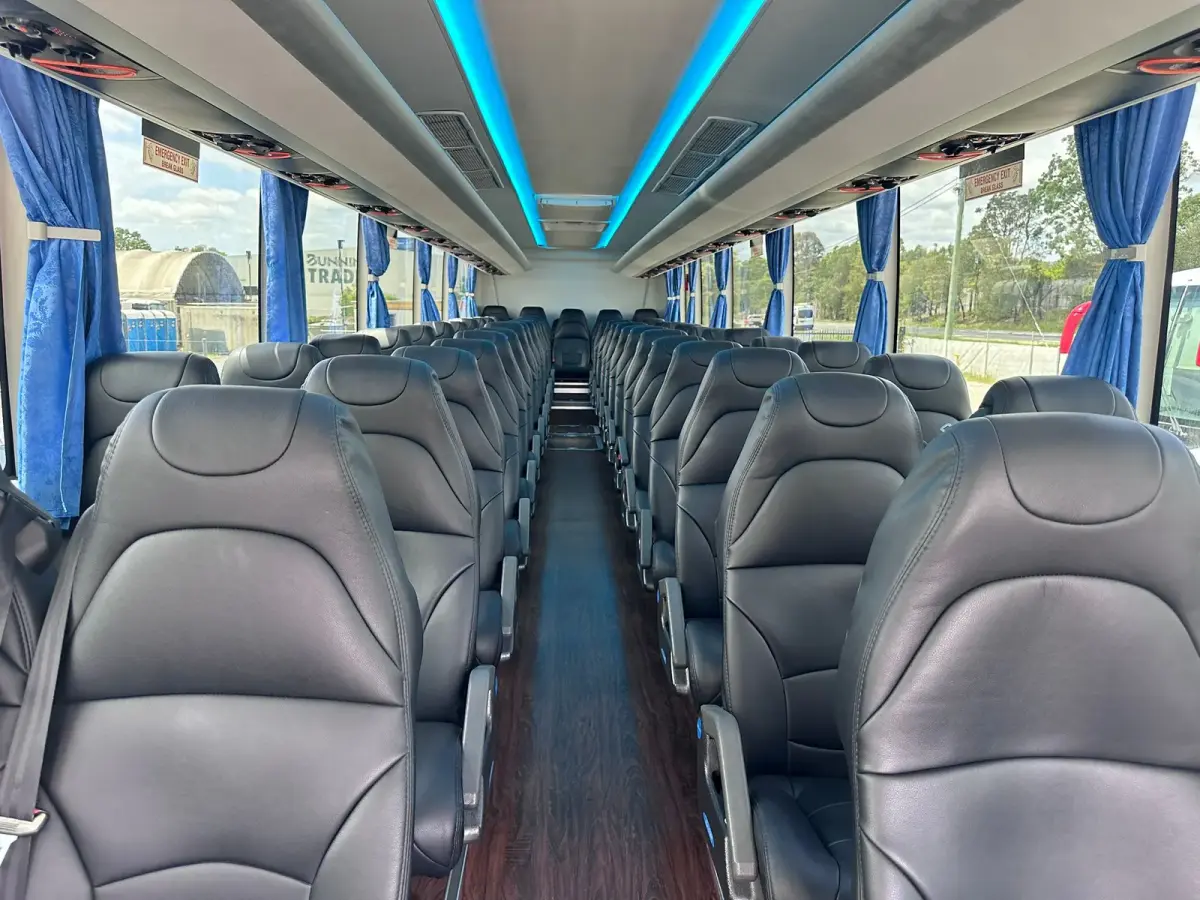
A small board meeting might only need a 12 seat vehicle doing a couple of runs. A congress with a few thousand delegates needs coaches, often several on each loop. Mixing is normal: coaches for the morning peak, a smaller vehicle for the quiet hours. The conference and hotel shuttles page explains how we usually set these up, and the planner on our home page shows roughly how size and frequency pull against each other.
When you’ve got hotels, dates and the program, send them through the quote form. The quote sets out the loops, vehicles and times, so the plan is in writing before the first delegate checks in.